
Overview
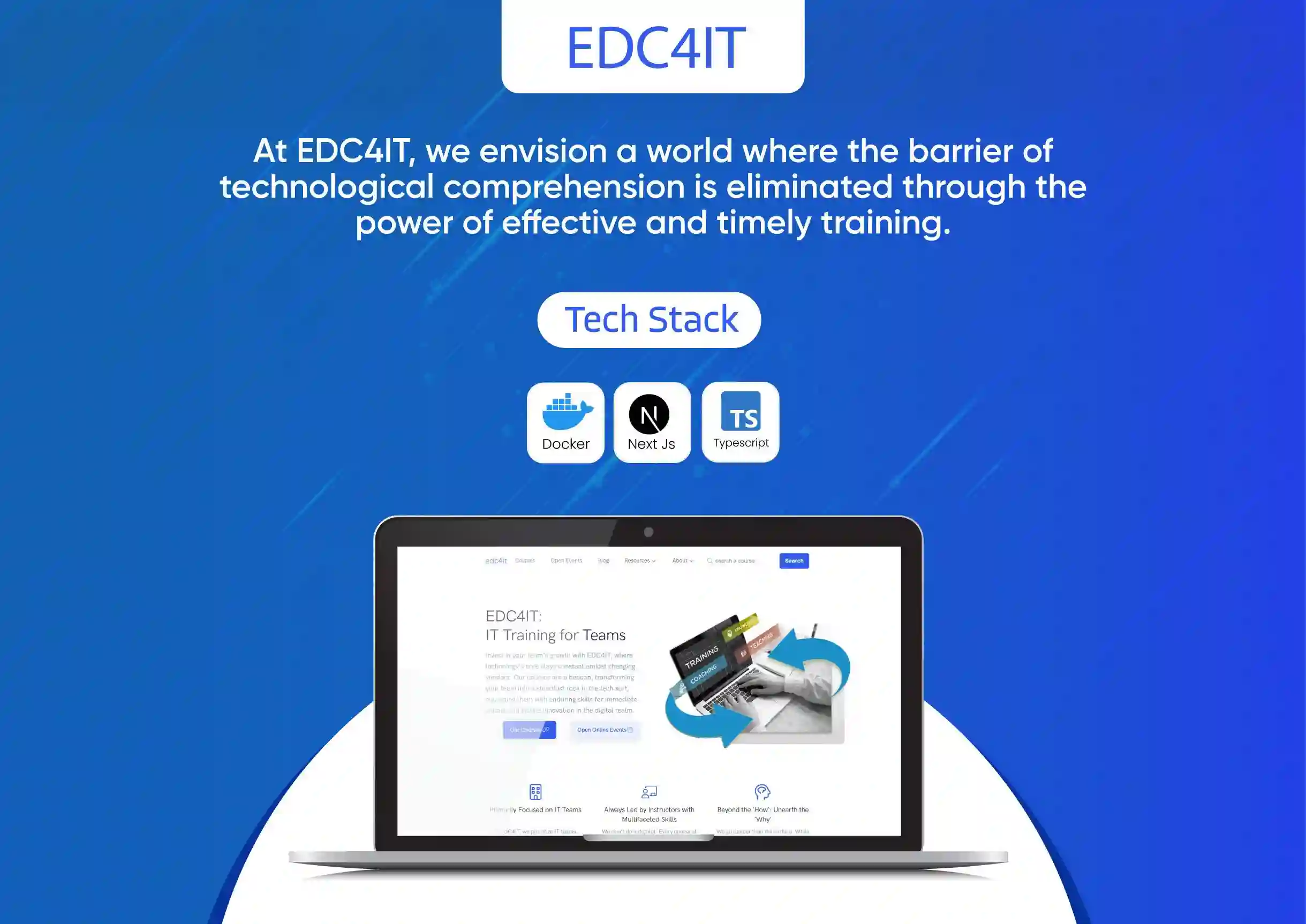
EDC4IT is a global IT training provider. It delivers practical, hands-on open-source training for technical teams.
Additionally, it is headquartered in the Netherlands. It also operates through offices in Bangladesh and Kenya.
EDC4IT offers tailored training programs in DevOps, infrastructure and open-source technologies. Moreover, its courses are flexible, accessible, and vendor-neutral.
As a result, IT professionals gain strong skills in cloud computing, automation, containerization and modern software workflows.
Therefore, organizations can adapt to rapid technological change and improve overall performance.
Problem Statement
Rapid Technological Change Outpacing Team Skill Sets
The speed of innovation in software development and IT operations means that organizations must continually upgrade their teams’ skills to remain competitive. Many existing training solutions rely on outdated materials or generic curricula that fail to reflect current industry practices or tools. This gap left IT teams unprepared for real‑world challenges such as cloud deployment, automation, and infrastructure orchestration, hindering organizational agility and growth potential.
Lack of Practical, Hands‑On Learning Opportunities
Traditional classroom training and theory‑centric programs often emphasize conceptual knowledge without providing sufficient hands‑on experience. As a result, learners struggle to translate theoretical understanding into practical workflows and real project execution. Teams faced difficulty in applying foundational concepts such as DevOps pipelines or container orchestration in live environments, reducing training ROI and limiting operational effectiveness.
Fragmented and Inconsistent Training Formats
Many training programs operate with a one‑size‑fits‑all approach, offering fixed schedules that do not accommodate diverse organizational needs. Whether training is delivered online, on‑site, or in hybrid models, inconsistency in structure and relevance made it challenging for teams to get uniformly valuable learning outcomes. Organizations seeking customized training to meet specific project requirements found themselves with rigid course formats that did not align with strategic goals.
Difficulty Scaling Training Across Distributed Teams
As businesses expand geographically and support remote technology teams, scaling consistent training becomes increasingly complex. Without scalable training solutions, organizations experience skills gaps that vary by location or department, leading to uneven performance and operational friction. This uneven capability overhead limited IT teams’ ability to implement scalable software solutions and support broader business initiatives.
Solution Statement
Vendor‑Neutral, Open‑Source Curriculum
To address gaps in technical preparedness, EDC4IT developed a vendor‑neutral curriculum centered on core IT principles and open‑source technologies. This curriculum focused on real tools and frameworks that professionals encounter daily in DevOps, cloud computing, and infrastructure engineering. By removing vendor lock‑in and emphasizing interoperability, the platform ensured that learning remained relevant regardless of the tools an organization used.
Hands‑On Labs for Practical Skill Building
EDC4IT structured its course experience so that approximately 60–70 percent of instructional time is dedicated to hands‑on labs and real environment exercises. This practical emphasis provided learners with direct experience in implementing and troubleshooting technologies such as container orchestration, automated deployments, and system integration workflows. Hands‑on labs ensured that theoretical knowledge translated into tangible operational capability.
Flexible Delivery Formats
To support diverse organizational needs, training was offered through multiple delivery formats, including online remote sessions, on‑site workshops, and hybrid blended learning. This allowed organizations to choose the mode of training that best fit their operational schedules and team structures. Flexible scheduling improved accessibility, engagement, and alignment with internal project timelines.
Customized Courses Aligned to Organizational Goals
EDC4IT designed and delivered customized training tailored to specific institutional needs, technology stacks, and strategic objectives. By aligning course content with an organization’s existing or planned infrastructure initiatives, teams gained skills that were immediately applicable to current projects, improving relevance and adoption. This customization enabled more impactful skill acquisition in a shorter timeframe.
Features
- Vendor‑Neutral Curriculum: Focused on essential open‑source and IT principles to support adaptable and future‑proof skill development.
- Hands‑On Labs: Practical exercises and real environment scenarios that reinforce learning through direct application.
- Flexible Delivery Models: Online, on‑site, and hybrid training formats that support diverse team requirements and schedules.
- Course Customization: Tailored training modules aligned to organizational goals, technology stacks, and project needs.
- Skill Assessment and Feedback: Structured evaluation to ensure learner competency and identify areas for further growth.
Benefits
- Enhanced Technical Competency: Teams gain practical capability in modern IT practices, making them more effective in managing and deploying scalable software solutions.
- Improved Adaptability: With foundational skills in key technologies such as DevOps and containerization, organizations are better equipped to respond to evolving tech environments.
- Operational Efficiency: Practical training reduces time required to solve real‑world technical challenges, improving team productivity and execution quality.
- Consistent Capability Across Teams: Flexible delivery and tailored content ensure that distributed teams adopt consistent skill standards, reducing performance variability.
- Cost‑Effective Training Investment: Customized, hands‑on programs maximize training ROI by focusing on relevant, actionable skills that directly support business growth and digital transformation.
Book a free consultation call with Ahmad Raza to explore ideas, clarify requirements.