
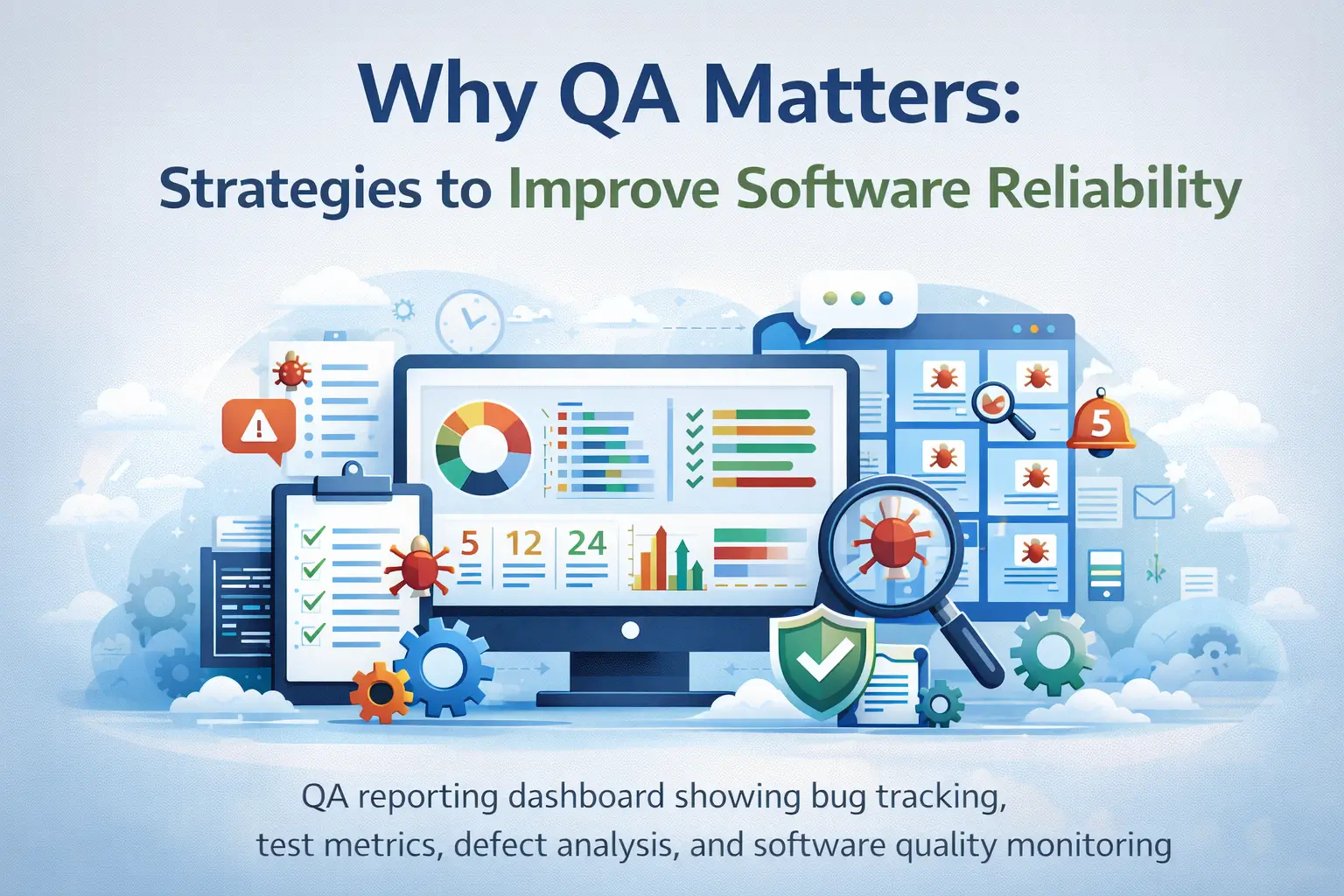
In today’s competitive digital landscape, software reliability is not optional. Users expect applications to work smoothly, securely, and consistently across devices and environments. Even minor bugs or performance issues can damage user trust, disrupt operations, and lead to financial loss. This is why Quality Assurance (QA) plays a critical role in modern software development.
QA is no longer just about finding bugs at the end of a project. It is a strategic practice that ensures software stability, usability, and long-term reliability.
Why Software Reliability Depends on QA
Unreliable software often results from rushed development cycles, limited testing, or manual processes that fail to catch edge cases. QA introduces structured testing methodologies that identify issues early and prevent defects from reaching production.
Reliable software leads to:
- Higher user satisfaction
- Fewer production failures
- Lower maintenance costs
- Stronger brand credibility
By embedding QA into the development lifecycle, teams can proactively manage risks instead of reacting to failures after launch.
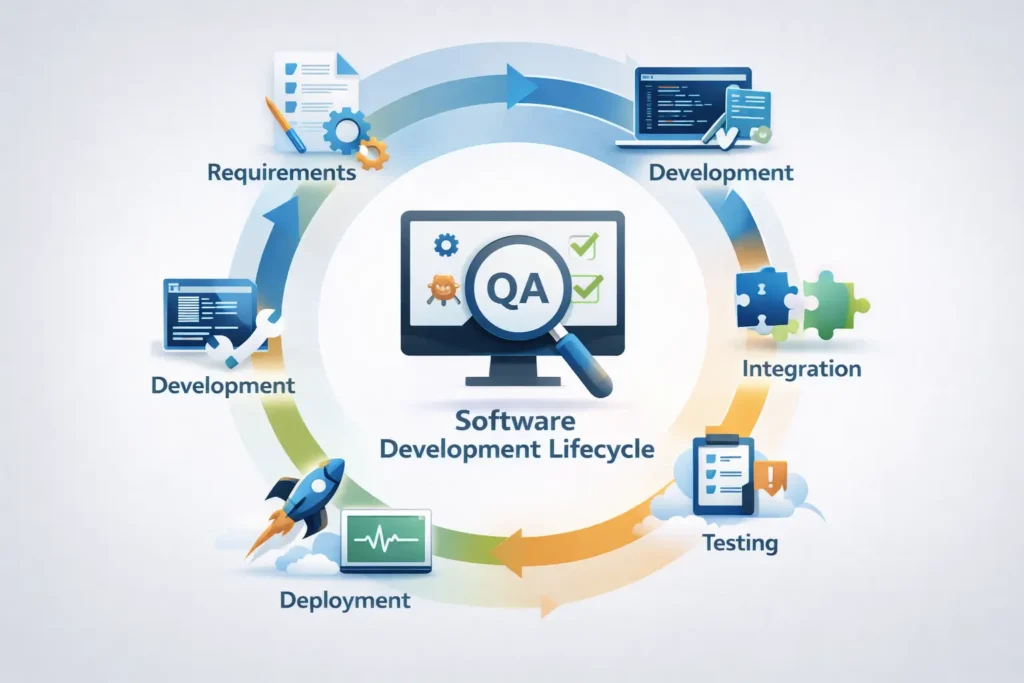
1. Start QA Early in the Development Process
One of the most effective QA strategies is shifting testing left—starting QA activities during the early stages of development rather than waiting until features are complete.
Early QA helps:
- Identify requirement gaps
- Prevent design flaws
- Reduce costly rework later
This approach ensures quality is built into the product from the beginning, not added as an afterthought.
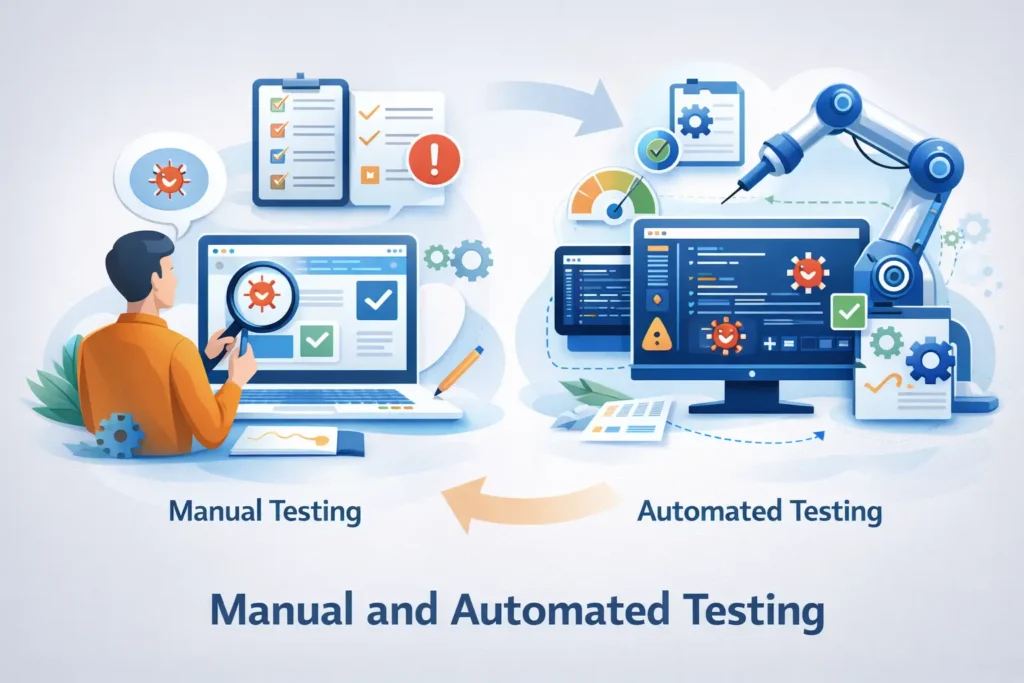
2. Combine Manual and Automated Testing
Automation improves speed and coverage, but manual testing remains essential for usability, user experience, and exploratory testing.
A balanced QA strategy includes:
- Automated tests for regression and performance
- Manual testing for UI, workflows, and edge cases
- Continuous testing within CI/CD pipelines
This combination improves accuracy while maintaining efficiency as applications scale.
3. Focus on Performance and Security Testing
Reliability is not just about functionality. Applications must perform well under load and protect sensitive data.
Effective QA strategies include:
- Load and stress testing
- Security vulnerability assessments
- Compatibility testing across devices and browsers
These practices help ensure the software remains stable, secure, and responsive in real-world conditions.
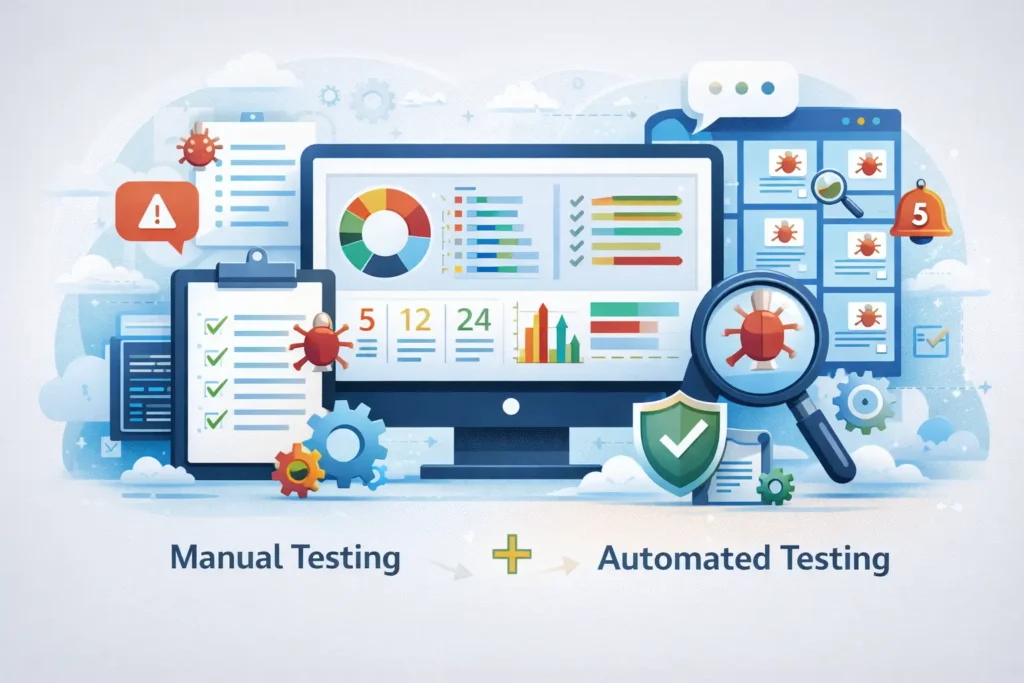
4. Use Clear Test Documentation and Reporting
Well-documented test cases and transparent reporting allow teams to track issues, measure quality, and make informed decisions.
Clear QA documentation enables:
- Faster issue resolution
- Better collaboration between teams
- Improved release confidence
Visibility into quality metrics helps stakeholders understand readiness and risk.
5. Make QA a Shared Responsibility
QA should not operate in isolation. When developers, testers, and product teams collaborate closely, quality improves across the board.
Shared ownership encourages:
- Faster feedback loops
- Fewer misunderstandings
- Higher accountability for reliability
This cultural shift transforms QA from a checkpoint into a continuous improvement process.
Conclusion
Quality Assurance is a foundational element of reliable software development. By starting QA early, balancing manual and automated testing, prioritizing performance and security, and fostering collaboration, businesses can deliver software that users trust.