
As businesses increasingly rely on cloud infrastructure for their operations, managing cloud costs has become a critical area of focus. While the cloud offers incredible scalability and flexibility, it can quickly lead to unpredictable costs if not properly managed. In fact, studies show that companies can save 30-50% of their cloud spending by implementing effective cloud cost optimization strategies.
The key to these savings lies in understanding how to leverage cloud services efficiently. Let’s dive into the best practices and tools that can help you achieve significant savings on your cloud infrastructure.
1. Right-Sizing Your Cloud Resources
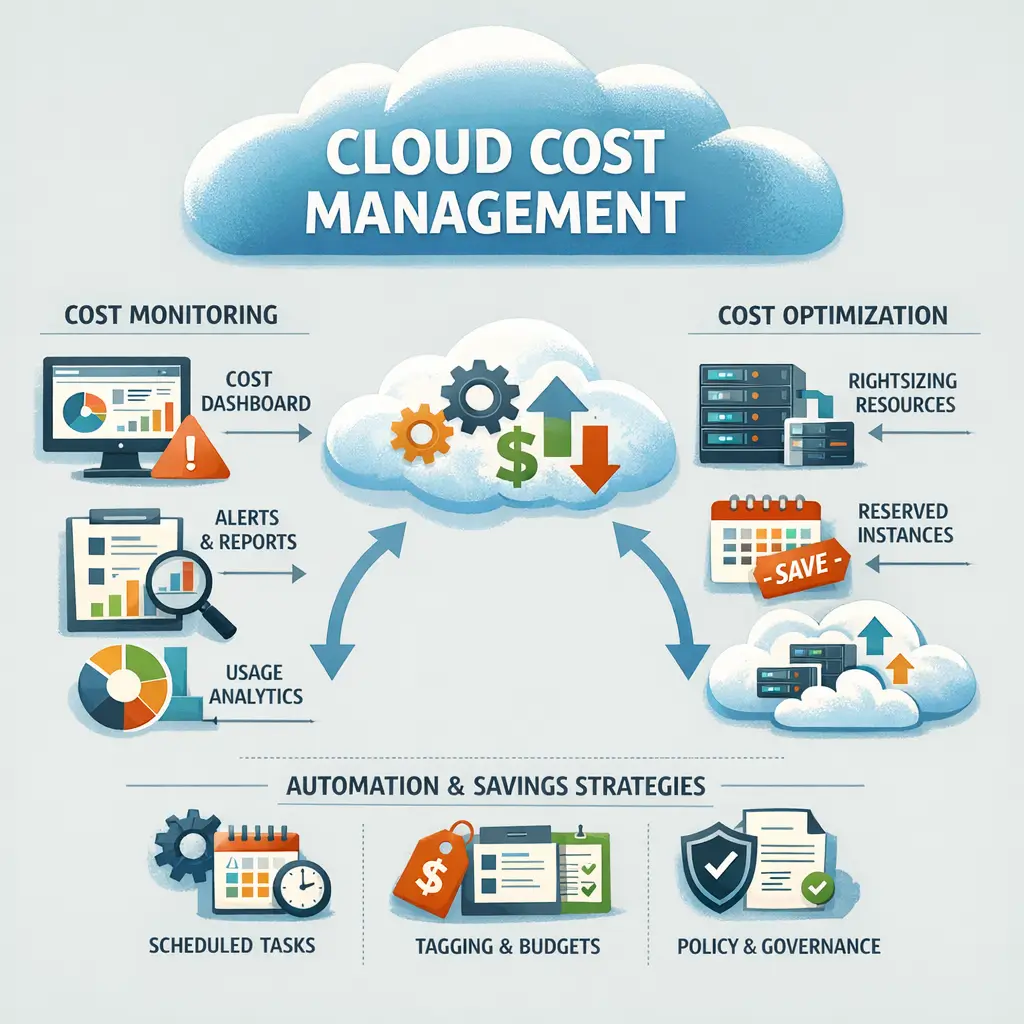
One of the most effective ways to save on cloud costs is through right-sizing your cloud resources. This means ensuring that your cloud instances, storage, and computing power are appropriately sized for your business needs.
Many businesses overestimate the resources required for their applications, leading to excessive provisioning. Regularly monitoring your usage and adjusting the size of your cloud resources can lead to savings by eliminating underutilized services. Tools like AWS Cost Explorer or Azure Cost Management can help monitor and adjust cloud usage automatically based on real-time data.
- To optimize your cloud environment further, explore our Cloud Infrastructure Services for professional guidance.
2. Utilize Reserved Instances or Savings Plans
Cloud providers like AWS, Google Cloud, and Azure offer reserved instances or savings plans that can significantly reduce costs when you commit to long-term usage. These plans allow you to lock in resources at a lower price, which can save up to 50% compared to on-demand pricing.
This strategy works best for predictable workloads that don’t vary significantly over time. If your business has stable usage patterns, reserving capacity in advance can unlock significant savings.
For more insights on reserved instances and savings plans, check out AWS’s Pricing Model to see how these options can help reduce your costs.
3. Implement Auto-Scaling and Automation
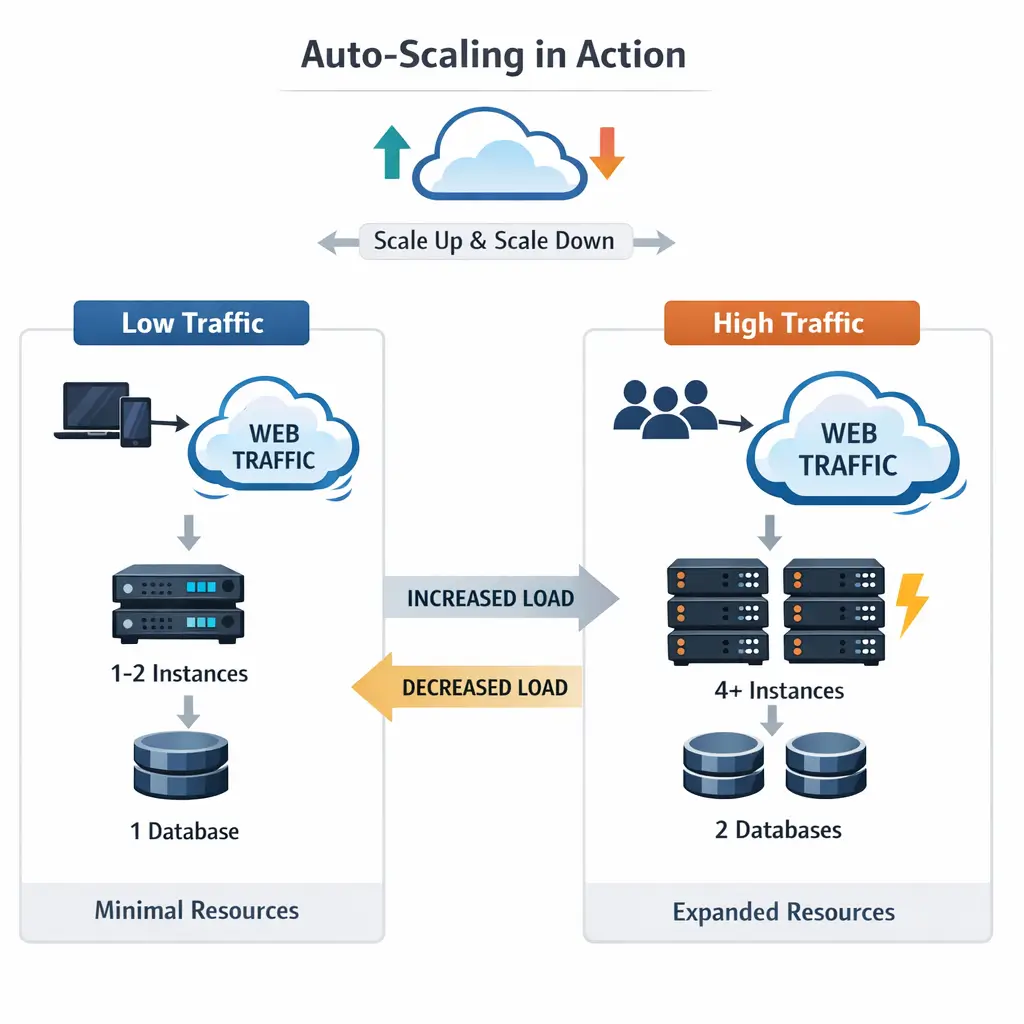
Cloud cost optimization isn’t just about reducing resource allocation — it’s also about automating it. Implementing auto-scaling allows your cloud infrastructure to adjust automatically to demand. During periods of low usage, resources scale down, which helps businesses avoid paying for idle computing power.
Additionally, setting up automation for shutdown schedules for non-production environments (like development or testing) ensures that services aren’t running when they’re not needed, saving money.
4. Leverage Cloud Cost Management Tools
Cloud providers offer cost management tools that give you visibility into your spending and usage patterns. These tools can help identify areas of inefficiency and track your optimization progress over time. Here are a few tools to consider:
- AWS Cost Explorer: Visualizes spending and usage patterns to identify cost-saving opportunities.
- Google Cloud’s Cost Management Tools: Offers detailed reports and billing alerts.
- Azure Cost Management and Billing: Provides insights into your cloud consumption to help you manage your spending more effectively.
By regularly reviewing these tools and analyzing their insights, businesses can continuously optimize their cloud infrastructure for cost savings.
- Our Cloud Infrastructure Services include expert guidance on setting up and using cost management tools to help you save on your cloud bill.
5. Take Advantage of Multi-Cloud or Hybrid Cloud Models
Another powerful strategy for cloud cost optimization is using a multi-cloud or hybrid cloud approach. By utilizing different cloud providers for different workloads, businesses can take advantage of the most cost-effective services without being locked into a single provider.
For example, a company might use AWS for storage, Google Cloud for machine learning, and Azure for office collaboration tools. This allows businesses to match the best value cloud services to their specific needs.
For a deeper dive into multi-cloud strategies, see IBM’s Multi-Cloud Approach to understand how businesses can reduce costs while improving flexibility.
6. Monitor and Optimize Third-Party SaaS Costs
Many businesses also use third-party SaaS applications alongside cloud infrastructure, but these tools can accumulate significant costs over time. Optimizing SaaS usage and ensuring you’re on the right plan can save businesses a lot.
Start by evaluating your current SaaS subscriptions, eliminating any unused or redundant services. Additionally, consider switching to open-source alternatives or consolidating tools that offer similar functionality.
Conclusion
Cloud cost optimization is an ongoing process that involves choosing the right resources, automating usage, and utilizing the tools available to monitor and reduce spending. By following these strategies, businesses can reduce their cloud costs by up to 30-50% and increase their overall efficiency.
To explore how cloud cost optimization can be implemented for your business, get in touch with our experts today!
Frequently Asked Questions (FAQs)
1. What is cloud cost optimization and how can businesses reduce cloud infrastructure costs?
Cloud cost optimization is the process of analyzing, managing, and reducing cloud infrastructure costs by improving resource efficiency and eliminating waste. Businesses can reduce cloud spending by implementing strategies such as right-sizing cloud resources, using reserved instances or savings plans, enabling auto-scaling, and leveraging cloud cost management tools. When properly executed, these cloud cost reduction strategies can help companies save 30–50% on cloud expenses.
2. How does right-sizing improve cloud cost management?
Right-sizing improves cloud cost management by ensuring that compute instances, storage, and other cloud resources match actual workload requirements. Over-provisioned or underutilized resources often increase cloud bills unnecessarily. By continuously monitoring usage with tools like AWS Cost Explorer, Azure Cost Management, or Google Cloud Cost Management, businesses can optimize resource allocation and eliminate idle infrastructure costs.
3. Are reserved instances and savings plans effective for cloud cost reduction?
Yes, reserved instances and cloud savings plans are effective cost optimization techniques for predictable workloads. Cloud providers such as AWS, Google Cloud, and Microsoft Azure offer discounted pricing when businesses commit to long-term usage. Compared to on-demand pricing, these options can reduce cloud infrastructure costs by up to 50%, making them ideal for stable and consistent usage patterns.
4. How do auto-scaling and automation support cloud cost optimization?
Auto-scaling and automation are critical components of cloud cost optimization. Auto-scaling dynamically adjusts computing resources based on real-time demand, preventing businesses from paying for unused capacity. Automation strategies, such as scheduled shutdowns for development or testing environments, further reduce unnecessary cloud consumption. Together, these practices improve operational efficiency and lower overall cloud spending.
5. What additional strategies help optimize cloud and SaaS costs?
Beyond infrastructure optimization, businesses can improve overall cloud cost efficiency by:
- Using cloud cost management and billing tools to track usage trends and identify inefficiencies.
- Implementing a multi-cloud or hybrid cloud strategy to select the most cost-effective services across providers.
- Monitoring and optimizing third-party SaaS subscriptions by eliminating redundant tools, consolidating services, or switching to cost-efficient alternatives.
These combined strategies create a comprehensive cloud financial management approach that improves flexibility while reducing total cloud expenditure.