
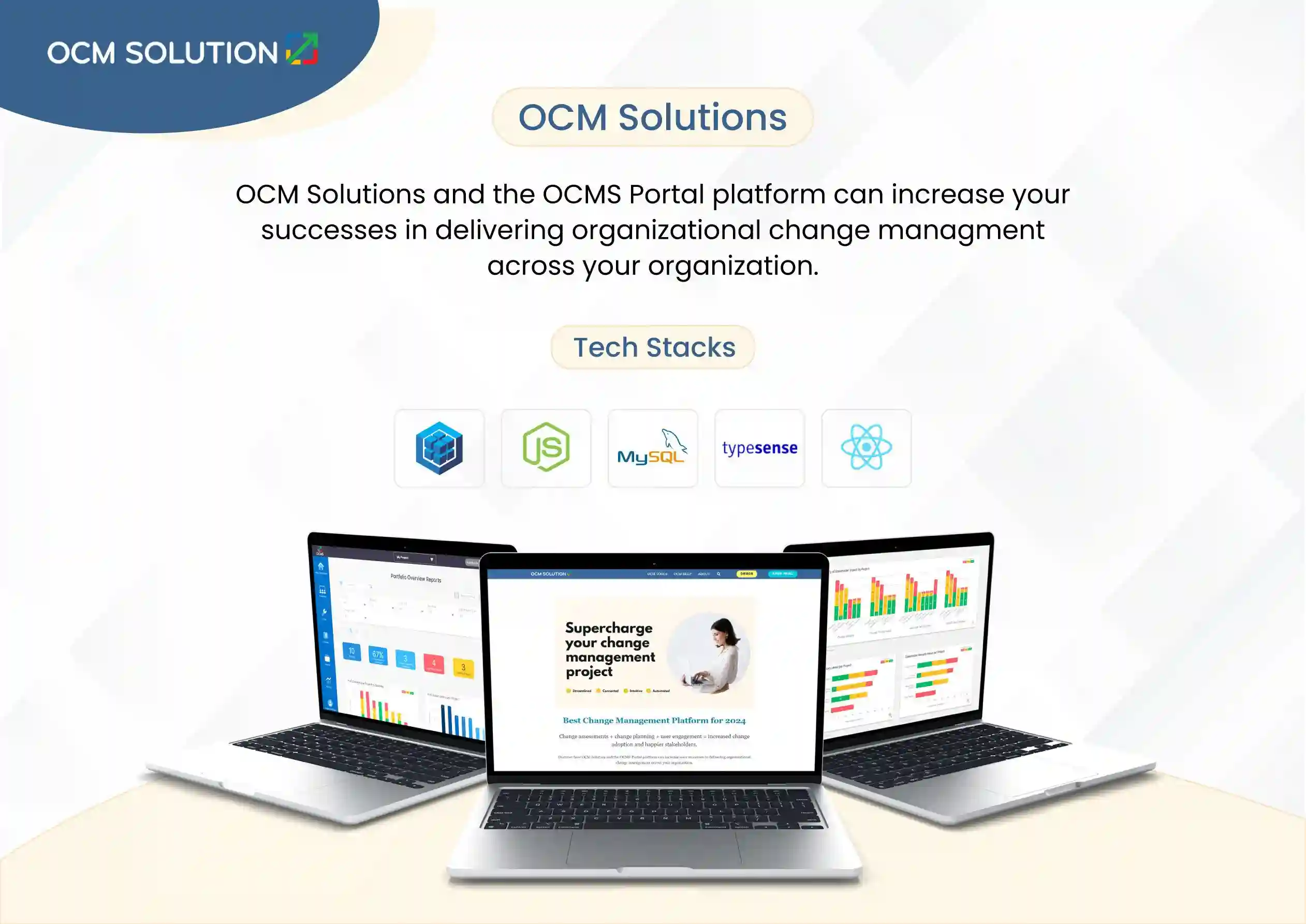
Overview
OCM Solution is an all‑in‑one organizational change management platform built to help businesses manage transformation initiatives more effectively. Change initiatives often fail due to fragmented processes, inconsistent tools, and lack of structured oversight. OCM Solution addresses these challenges by offering a comprehensive suite of tools that support every phase of change management, including impact assessment, stakeholder engagement, resistance tracking, and performance evaluation. By providing a centralized digital platform for planning, executing, and sustaining change, OCM Solution enhances organizational agility, improves communication across teams, and increases the likelihood of lasting adoption. The platform is designed for scalable use across departments, making it suitable for organizations of varying sizes undergoing transformation in technology, operations, culture, or structure.
Problem Statement
-
Fragmented Change Management Processes
Organizations often rely on disconnected tools and manual processes to plan and execute change. Traditional spreadsheets, shared documents, and disparate systems create inefficiencies that reduce visibility into critical tasks. Without a unified platform, teams struggle to coordinate assessments, track progress, and maintain alignment across departments, leading to errors and delays in implementation.
-
Lack of Standardized Methodologies
Many businesses manage change on an ad hoc basis without clearly defined frameworks or standard methods. This absence of consistency leads to inconsistent practices across projects, with teams operating in isolation and lacking a cohesive approach to change. As a result, organizational leaders find it difficult to measure, refine, and scale change outcomes across initiatives.
-
Inadequate Stakeholder Engagement
Successful change requires active involvement from stakeholders at all levels. However, without dedicated tools to track stakeholder influence, communication preferences, and engagement levels, organizations often struggle to maintain meaningful dialogue. This disconnect can lead to misunderstandings, reduced buy‑in, and increased resistance among those who are most affected by change.
-
Resistance to Adoption and Low Participation Rates
When change impacts people’s daily work or job responsibilities, resistance is common. Manual or poorly supported change efforts fail to surface early signs of pushback, resulting in reduced adoption rates and low participation. Without mechanisms to identify and address resistance, change initiatives risk stagnation and diminished returns on investment.
Solution Statement
-
Centralized Change Management Platform
OCM Solution provides a unified platform that consolidates all change management activities into a single interface. By centralizing planning, assessment, and execution tasks, organizations gain a holistic view of their transformation efforts. This integrated approach removes silos, improves collaboration, and ensures that all stakeholders are working from the same data and dashboards.
-
Standardized Frameworks and Templates
To promote consistency and repeatability, OCM Solution includes standardized methodologies and templates for key activities such as impact assessments, readiness evaluations, and communication planning. These ready‑made frameworks help teams adopt industry best practices without creating processes from scratch, enabling more predictable and measurable outcomes.
-
Stakeholder Engagement and Tracking Tools
The platform features robust stakeholder analysis and engagement tracking capabilities that help organizations identify key influencers, understand concerns, and tailor communication strategies. With tools to monitor interactions and engagement levels, change leaders can proactively address feedback, foster participation, and build stronger alignment throughout the organization.
-
Resistance Management and Monitoring
OCM Solution incorporates resistance management dashboards that capture early indicators of pushback, track behavior changes, and highlight areas requiring targeted support. By identifying resistance patterns early, teams can deploy focused interventions, such as additional training or targeted communication, to increase participation and reduce friction during implementation.
Features
- Impact and Risk Assessment Tools: Enables teams to evaluate how change affects business units, roles, and processes.
- Stakeholder Analysis and Engagement Tracking: Identifies key stakeholders and monitors their engagement throughout the change lifecycle.
- Resistance Management Dashboards: Provides insights into resistance indicators and helps teams plan mitigation strategies.
- Communication Planning and Tracking Modules: Supports the creation, scheduling, and monitoring of change communications across audiences.
Benefits
- Streamlined Change Management Processes: By consolidating tools and processes into one platform, organizations reduce redundancy and accelerate execution.
- Enhanced Stakeholder Engagement and Communication: Structured engagement tracking improves dialogue, alignment, and collaboration among teams.
- Reduced Resistance and Higher Adoption Rates: Early identification of resistance and targeted mitigation strategies help increase participation and acceptance of change.
- Actionable Insights Through Analytics: Built‑in reporting and performance tracking support data‑driven decision‑making and continuous improvement of change initiatives.
- Improved Organizational Agility: With standardized processes and scalable change capabilities, organizations are better equipped to adapt to evolving business requirements and technological shifts.